Zinc fume extraction: enclosure, air and the bag filter
The white cloud over a galvanizing kettle is flux fume. Catching it well depends far more on the enclosure than on the size of the fan. How to design the whole system.
When fluxed steel goes into molten zinc, the flux film breaks down in seconds and leaves the bath as a dense white fume. It is mostly zinc chloride, ammonium chloride and zinc oxide, in very fine particles. The fume is irritating to breathe, it corrodes the building and the crane, and the pollution board will measure it at the stack. A zinc fume extraction system (ZFE) has two jobs: catch the fume at the kettle, and clean the air before it leaves.
Catch it: the enclosure does most of the work
The fume rises hot and fast during the dip. Side hoods along an open kettle have to pull a lot of air to bend that plume into the duct, and a draught across the shed blows it away from them. An enclosure over the kettle, with doors or sliding panels that close while the load is dipped, contains the fume first and lets the fan draw it out steadily. For the same capture, an enclosure needs much less air than open side hoods, and less air means a smaller filter, smaller ducts and a smaller fan.
- Close the enclosure during immersion and the first seconds of withdrawal, when fume is heaviest.
- Keep openings for the crane rope and the jig as small as the work allows.
- Size the air so the fume cannot spill out of the openings, then add a margin for the doors being opened.
Carry it: ducts that stay clean
Flux fume settles in slow ducts and absorbs moisture, so ducts are sized for a velocity of about 15 to 20 m/s, with as few bends as the layout allows and cleaning doors where dust can collect. In humid weather and in winter, insulating the duct helps to keep the fume above its dew point until it reaches the filter.
Clean it: the bag filter
A pulse-jet bag filter is the usual choice. The air passes through fabric bags, the fume stays on the outside, and short pulses of compressed air knock it off into the hopper. Flux fume is sticky and takes up water, so it needs a gentle filter.
| Design point | Typical choice for flux fume |
|---|---|
| Air-to-cloth ratio | About 0.8 to 1.0 m³ of air per m² of cloth per minute |
| Bags | PTFE membrane, so the fume stays on the surface and releases |
| Start-up | Lime pre-coat on new bags |
| Hopper | Heated or insulated in humid climates |
| Fan | After the filter, on the clean side |
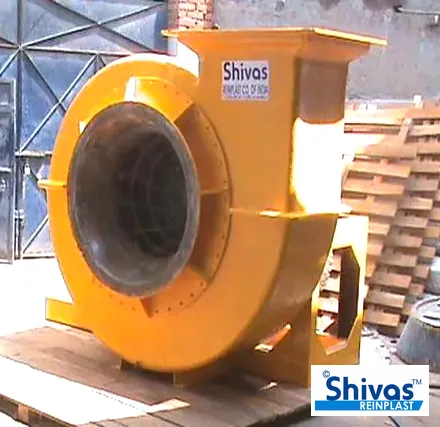
The fan sits after the filter, so it handles clean air and does not wear. Its motor follows from the air flow and the total pressure drop of hoods, ducts, filter and stack; our fan calculator works it out in kW and HP.
Run it
- Interlock the fan with the dip, so the enclosure is never closed with the fan off.
- Log filter pressure drop. A steady rise means the bags are blinding; a sudden fall means a torn bag.
- Keep the collected dust dry and handle it as your pollution consent requires.
- Check the enclosure doors and seals as often as the burners.