Low-silicon steel, formed corners and controlled welding slow zinc attack at the weak points.
SHIVAS Technology · Galvanizing
Zinc kettle
Galvanizing kettles in kettle-grade low-silicon steel, sized to your work and built to carry hundreds of tonnes of zinc at 450 °C.
- Kettle-grade steel
- Sized to article
- Wall thermocouples
- Replacements
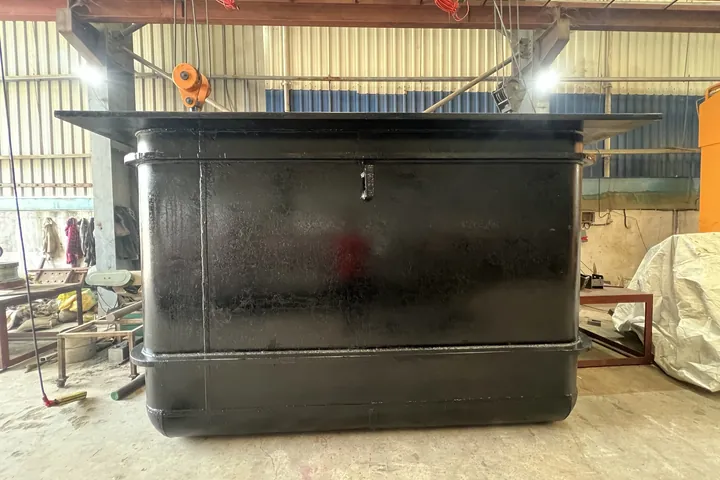 17 photos
≈ 450 °Cworking zinc temperature
≈ 6.6 t / m³molten zinc the walls carry
Press-formed cornerswelds kept out of the hottest, most stressed zone
Overview
The kettle is the most expensive single item in a galvanizing plant and the one that stops everything when it fails. Molten zinc slowly dissolves the steel wall; the rate rises sharply above about 480 °C on the inner face, so a kettle's life is decided by its steel, its welds and how evenly the furnace heats it.
SHIVAS kettles are fabricated from low-silicon, low-carbon kettle-grade plate, with corners formed on our press so the welds sit in the straight walls. Top flange, stiffeners and wall thickness are designed for the zinc head and the furnace layout. We size length, width and depth from your largest article, the dip cycle and the zinc mass needed to hold temperature through a load.
Why it pays
Enough zinc to hold temperature under your heaviest load, without paying to keep spare zinc molten.
Wall thermocouple pockets let the furnace control the steel temperature, not just the zinc.
We build to the size of your existing furnace so a replacement drops in with minimum downtime.
Technical specification
Typical ranges. Every unit is sized to your duty; the offer carries the exact figures.
| Length | From about 2.5 m for spin and small parts to 12.5 m for poles and towers; longer on request |
|---|---|
| Width | Typically 0.9 to 1.8 m |
| Depth | Typically 1.2 to 3.5 m |
| Material | Kettle-grade low-silicon, low-carbon steel plate |
| Wall thickness | Chosen for size and zinc head, typically 40 to 60 mm |
| Corners | Press-formed with generous radius |
| Instrumentation | Thermocouple pockets on the walls |
| Supports | Top flange on the furnace, bottom kept clear for even heat |
Calculators
Work it out for your own plant. Every input is a typical value you can change and the results follow as you type; send the result to us and we reply with a proposal.
Options, build and uses
Options
- Drop-in replacement for an existing furnace
- Wall thermocouple sets
- Kettle lifting beams and transport frame
- Start-up and fill procedure
How we build it
- Plate cut, formed and welded in our shop
- Weld procedure and inspection records
- Dimensional check before dispatch
Who it is for
- New galvanizing plants
- Replacement kettles
- Spin galvanizing kettles
Part of
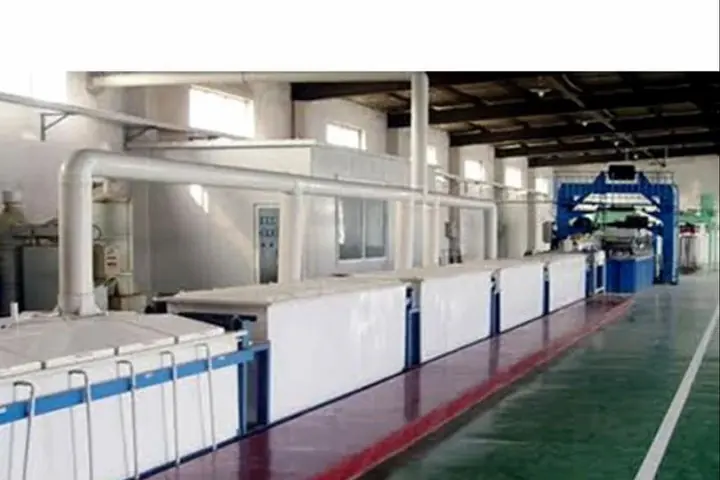
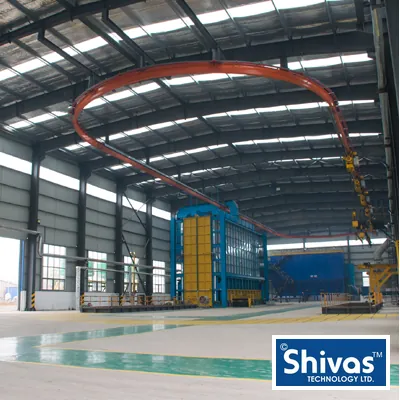
3D model
Computer model from a real SHIVAS project. It shows the arrangement; it is not a photo.
From our engineers
Questions buyers ask
How long does a kettle last?
Life depends mostly on wall temperature, heating evenness and steel chemistry of the work. A well-run kettle commonly lasts several years; local overheating can halve that.
Why not just make the kettle bigger?
Every extra tonne of zinc has to be bought and kept molten. We size the zinc mass to about ten times the hourly throughput so temperature holds without waste.
Can you check our old kettle?
Yes. Wall thickness readings and a look at the furnace help decide whether to replace now or plan it.
Enquiry · Zinc kettle
Get a quote
Tell us the capacity, sizes and site. We reply with a scheme, a layout and an offer.
What we need for your quote
- Inside length, width and depth wanted (or your largest article)
- Existing furnace drawing for replacements
- Heating type
- Expected tonnes per hour