Less iron into the kettle means less dross per tonne.
SHIVAS Technology · Galvanizing
Flux regeneration
Continuous flux regeneration: iron out, flux back in spec, less dross and ash in the kettle.
- Continuous iron removal
- Filter press
- Lower dross
- Flux kept in spec
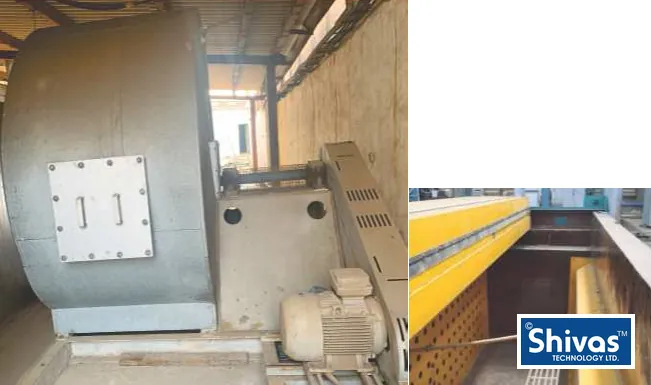
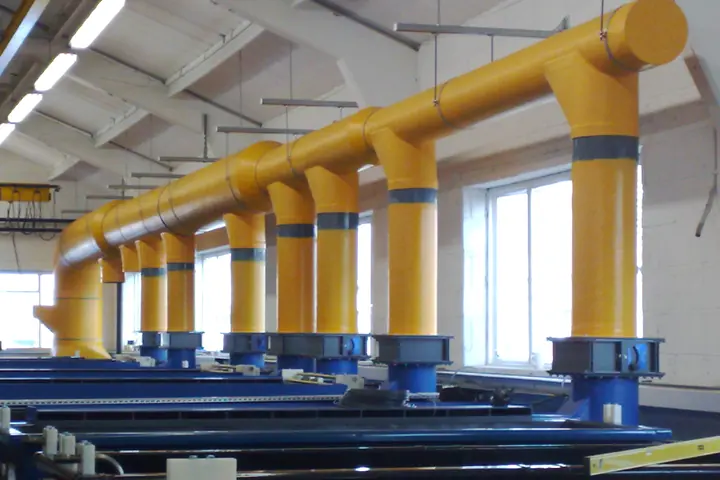
 3 photos
Iron removed continuouslyoxidation and filtration
Less drossiron in flux becomes dross in zinc
Flux kept in specdensity and acidity controlled
Overview
Every load carries a little iron from the pickling acid into the flux. Iron in the flux goes on into the zinc and forms dross, a zinc-iron alloy that sinks and has to be removed and sold cheaply. Flux with high iron also gives poorer coatings.
A flux regeneration unit pumps flux through a reactor where iron is oxidised and precipitated, then through a filter press that removes the iron sludge. Clean flux returns to the tank. pH, density and temperature are kept in range, so the flux works properly and lasts.
Why it pays
Stable flux chemistry gives even wetting.
No dumping and remaking flux.
Automatic dosing and filtration.
Technical specification
Typical ranges. Every unit is sized to your duty; the offer carries the exact figures.
| Process | Oxidation of Fe²⁺, precipitation, filtration |
|---|---|
| Filter | Filter press with PP plates |
| Reactor | PP / FRP with agitator and dosing |
| Controls | pH and density monitoring, automatic dosing |
| Sizing | From flux volume and iron carry-over |
How it works
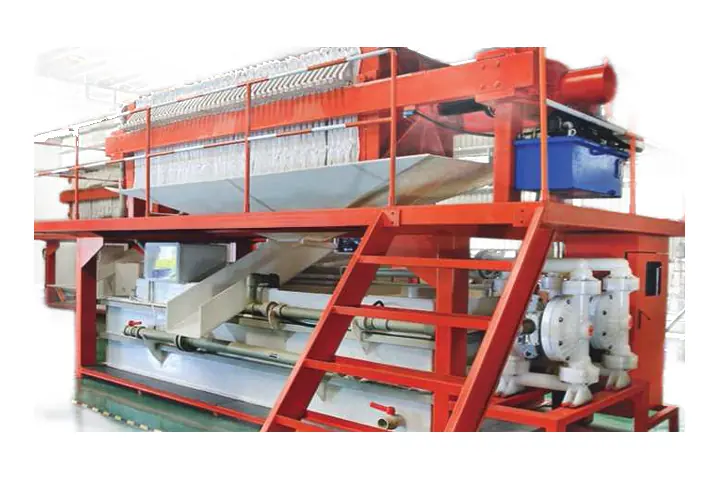
Flux regeneration · filter press
Watch it run →Iron dragged in from pickling builds up in the flux. The regeneration loop oxidises it and raises pH so it drops out as iron hydroxide, and a filter press removes it as cake. Clean flux goes back to the tank.
Main parts
- 1Flux tankFlux carrying dissolved iron from pickling.
- 2Transfer pumpDraws flux to the reactor.
- 3DosingHydrogen peroxide oxidises the iron; ammonia adjusts pH.
- 4ReactorAgitated vessel where iron hydroxide forms.
- 5Filter pressPlates trap iron hydroxide as cake.
- 6Cake dischargePlates open one by one and the cake drops out.
- 7Clean flux returnFiltrate goes back to the flux tank.
At a glance
- Removes
- Iron as Fe(OH)₃
- Separation
- Plate filter press
- Benefit
- Less dross and ash
- Mode
- Continuous or batch
Options, build and uses
Options
- Flux heating with heat recovered from the quench tank
- Automatic density control
- Sludge handling
How we build it
- Tanks and reactor from our PP/FRP shop
- Pumps and filter press integrated by SHIVAS
Who it is for
- All batch galvanizing plants
- Wire galvanizing lines
Part of
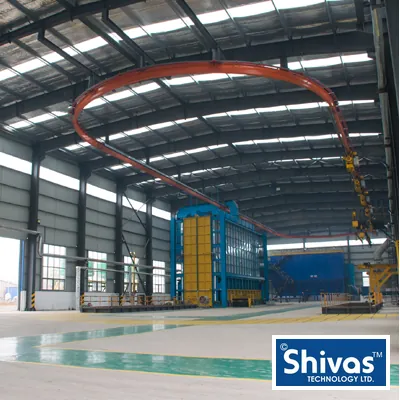
3D model
Computer model from a real SHIVAS project. It shows the arrangement; it is not a photo.
Questions buyers ask
How fast does it pay back?
Mostly through dross: the more iron your flux carries now, the faster the payback.
From our engineers
Practical notes from the engineers who design and build these plants.
- Ash, dross and flux inclusionsCoating defects · 2 min read
- Flux: the cheapest bath that decides your zinc billPretreatment · 2 min read
- Dross in the kettle: where the iron comes from and how to take it outGalvanizing practice · 3 min read
- Running the zinc bath: temperature, additions, dross and ashGalvanizing practice · 2 min read
Enquiry · Flux regeneration
Get a quote
Tell us the capacity, sizes and site. We reply with a scheme, a layout and an offer.
What we need for your quote
- Flux tank volume
- Tonnage
- Current iron level if known