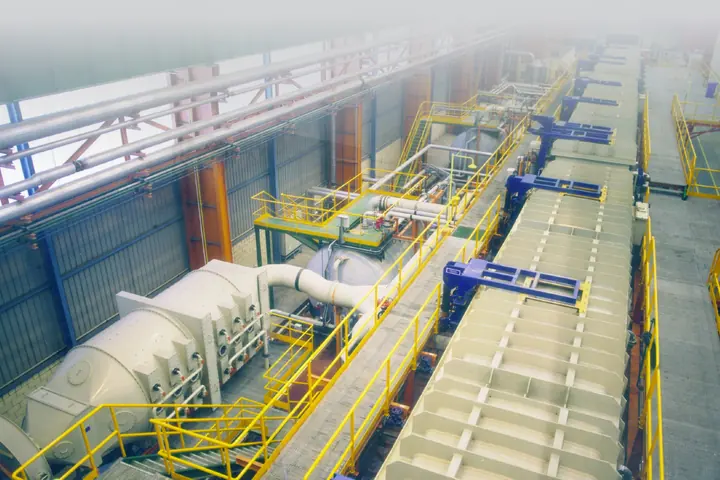
SHIVAS Technology Limited designs, builds and commissions turnkey galvanizing plants in Ghaziabad, India. Our founding company, SHIVAS Reinplast Company of India (since 1991), builds the acid-proof tanks, scrubbers and effluent plants around them; switch to it at the top.
Wire drawing machines and complete drawing lines
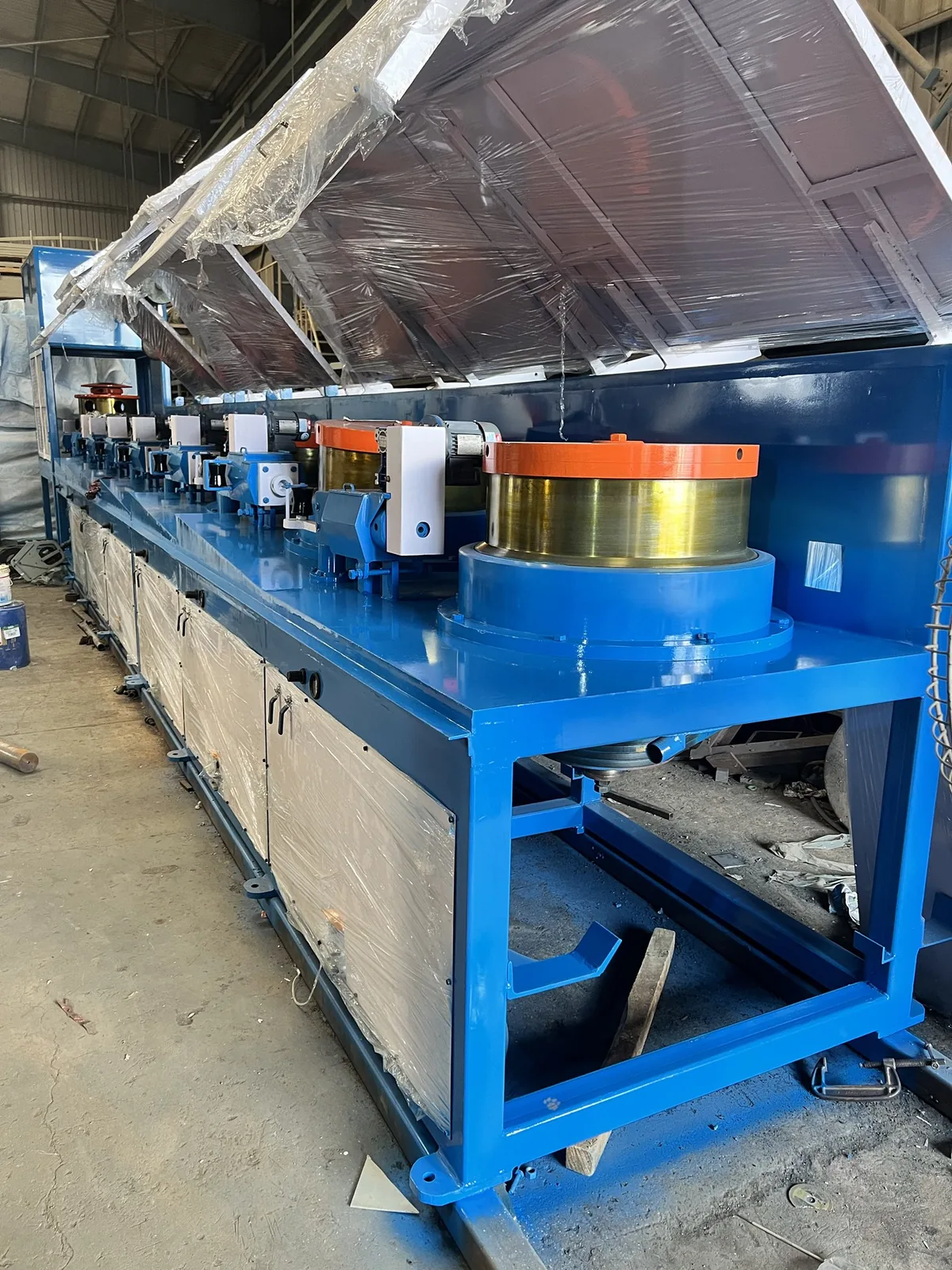
SHIVAS Technology Limited designs and builds straight line and OTO machines, dead block coilers, payoffs, spoolers and complete wire lines in Ghaziabad, India.
Galvanizing protects steel from rust. The steel is cleaned, then dipped in molten zinc at about 450 °C, and the zinc bonds to it as a hard coat that lasts for decades. We design, build and start up complete galvanizing plants, or supply any part of one.
Complete plants, or single items for a running plant
Zinc kettles, furnaces and burners
Cleaning tanks, fume extraction and controls
Wire drawing machines
Wire drawing makes wire from steel rod. The rod is pulled through a row of dies, each a little smaller than the one before, until it is the size you need. We build the machines that do it, and complete lines from rod coil to finished wire.
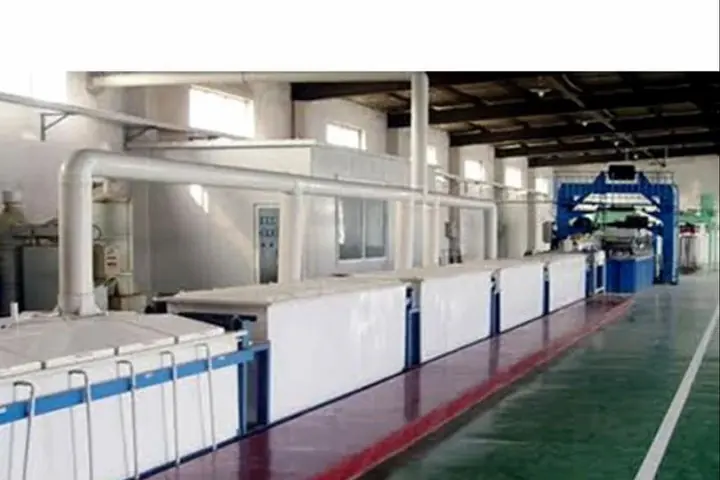
Turnkey hot-dip galvanizing plants, zinc kettles and furnaces
Made in our shops
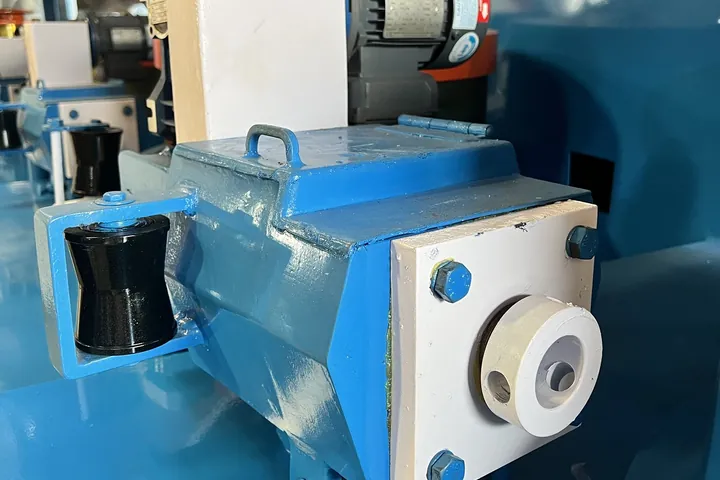
PP-H, FRP and mild-steel fabrication: tanks, ducting, scrubbers, steelwork
Designed to
ISO 1461, ASTM A123 / A153, IS 2629, IS 4759, IS 4826
For
Galvanizers of structures, towers, poles, crash barriers, fasteners and wire
Where
Kavi Nagar Industrial Area, Ghaziabad, India
What we make
Wire drawing machines and complete drawing lines
Machines
Straight line, OTO, dead block coilers, payoffs, pointing, butt welding, spoolers, rotating die boxes
For wire
Low and high carbon, spring, galvanizing feed, binding, CO₂ / MIG
Where
Kavi Nagar Industrial Area, Ghaziabad, India
Product finder
Find your product
Answer three questions. We show the SHIVAS machines and plant that fit, and for galvanizing, what it will cost you per tonne.
Product finder
Find your machine
Answer three questions. We show the SHIVAS machines and lines that fit what you draw.
About SHIVAS Technology
Two metals. One works. We turn rod into wire, and wrap steel in zinc. Designed, fabricated and commissioned from Ghaziabad.
Fabricated in-housePP-H · FRP · MS
Process tanks, ducting, scrubbers and steelwork are made in our own shops, so we control the parts that corrode first.
One engineering teamMachine to plant
Combustion, process metallurgy, PLC and mechanical design sit under one roof, from a single die box to a full galvanizing plant.
Sister companySHIVAS Reinplast
Pickling plants, fume scrubbers, FRP blowers and effluent treatment close the environmental loop around every line we build.
SHIVAS TechnologyWire drawingOverview
The line
How a wire drawing line works
Rod goes in at one end and finished wire comes out at the other. Tap any step to see the machine that does it.
Wire drawing machinery
Rod in, wire out. Straight line machines, OTO machines, dead block coilers, payoffs, pointing and butt welding machines, spoolers and rotating die boxes. Single machines or complete drawing lines for low carbon, high carbon, spring, galvanizing feed and binding wire, plus complete CO₂/MIG wire, electro-galvanizing and coil-drying plants.
Set the rod, the finished size and the number of dies. Volume stays constant, so every die that thins the wire also speeds it up. Speeds and block rpm follow from the finish speed.
Total area reduction86.8%
Reduction per die20.2%Balanced
Elongation×7.56
1 tonne of rod makes40.6km
Δ factor per die1.9Good range
Equal area reduction per die. Typical dry drawing band 15 to 25 % per die. Δ = (α ÷ r)(1 + √(1 − r))², with α in radians; aim for about 1 to 3. rpm shown for a 600 mm block (SLM-600). A SHIVAS engineer tunes the final schedule to your rod grade and dies.
Product catalogue
Wire drawing machines we make
Swipe or use the arrows to see the whole range.
SHIVAS TechnologyGalvanizingOverview
SHIVAS Technology · Hot-dip galvanizing plants
Hot-dip galvanizing plants
Bare steel in, zinc-armoured steel out. Turnkey galvanizing plants for structures, towers, poles, crash barriers, fasteners and wire. Furnace, kettle, pretreatment, fume control, flux regeneration and handling, designed as one process by one team.
How galvanizing works, step by step. Keep scrolling: a steel beam travels through all nine tanks of a galvanizing line. The card names each tank and what it does; the bar at the bottom shows the zinc coating building up layer by layer. ↓
GalvanizingThe processStep by step
How galvanizing worksOne steel beam goes through all nine tanks, and the bar at the bottom shows the zinc coat growing.
01 / 0950 °CAlkaline degreaser · 40–60 °C
Degreasing
Oil, grease and drawing soap come off first. Zinc only bonds to clean steel, so this bath sets the result for everything after it.
It runs by itself from degreasing to passivation, then starts again. Swipe the line or tap a step to stop at one tank; it carries on a few seconds later.
Coating section · Fe–Zn layers0µm
ISO 1461 · 85 µm
Γ Gamma 21–28 % Fe · 250 DPN
δ Delta 7–11 % Fe · 244 DPN
ζ Zeta ~6 % Fe · 179 DPN
η Eta pure zinc · 70 DPN
Bath temperature50 °C
SHIVAS TechnologyComplete plantsAnimated
Interactive
A complete plant, running
Not one machine but the whole works, seen from above: a batch galvanizing plant from jigging to dispatch.
A complete wire plant, running
The whole wire route seen from above: rod coil in, drawn, cleaned, galvanized and coiled.
SHIVAS TechnologyGalvanizingKettles and furnaces
The heart of the plant
Zinc kettles & furnaces
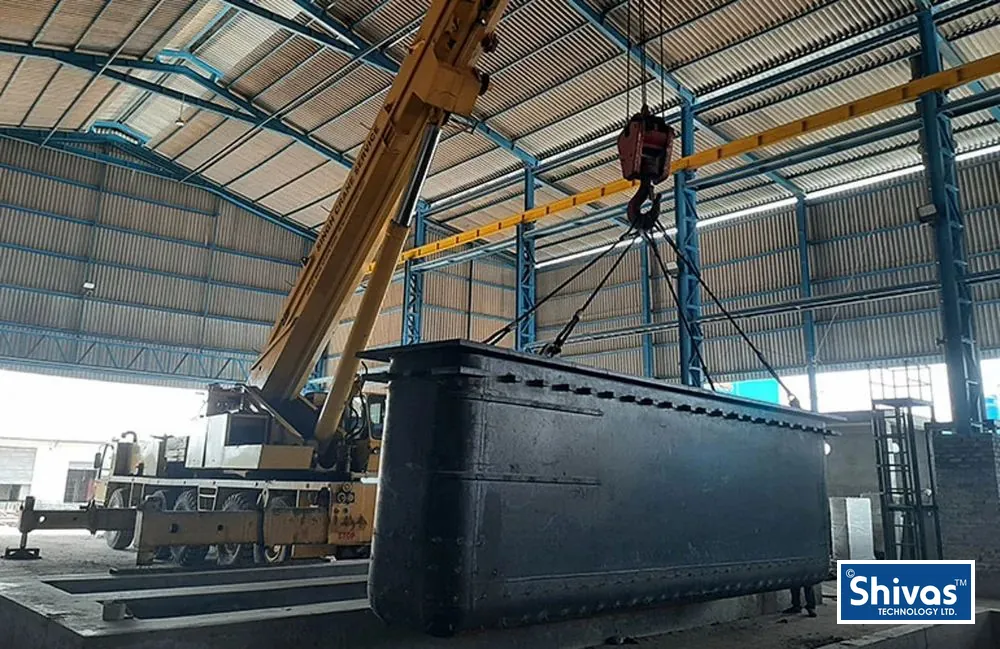
The kettle carries hundreds of tonnes of zinc at 450 °C and is heated through its own walls, every hour of the year. SHIVAS designs kettle, furnace and burner layout together, because how heat reaches the wall decides how long a kettle lives.
Kettle size check. Drag the sliders or pick an example size. The 3D drawing is to scale, with a 1.75 m person for reference: length, width and depth all change as you drag. It shows the kettle with its flange and stiffeners, the molten zinc and, dashed in amber, the largest article it takes.
Zinc in bath352t
Bath surface14.4m²
Largest article it takes (L × B × H)8.4 × 1.2 × 3.3 m
How we size a kettle: inside length = article length + 100 mm; inside width = article width + 100 mm; depth = article height + 100 mm of zinc below the article + 100 mm left empty at the top. The zinc figure fills the kettle to 100 mm below the top.
Zinc at 6.6 t/m³ with the bath 100 mm below the flange. Article envelope is indicative; final clearances are set in design. Work out your zinc consumption →
Even heat flux, no hot spots eating into the plate
Ceramic fibre lining for fast heat-up and low losses
Natural gas, LPG or oil firing with PID control
Flue gas recovered to the dryer; quench heat recovered to warm the flux
Around the bath
Zinc enclosure feeding the fume bag filter
Dross grab and zinc pump
Zinc ash recovery on site
Burner management and SCADA logging
Kettle change and furnace relining service
SHIVAS TechnologyWire drawingMachines, animated
Interactive
Wire drawing machines, animated
Each drawing is a simplified side view of the machine, running.
1 Pick a machine from the tabs
2 Watch it run; the dots show the wire moving
3 Tap a number to name that part
⤢ Expand for full screen
SHIVAS TechnologyWire drawingTake-up and joining
Interactive
Take-up, drying and joining
The coiler and spooler that take the wire off the machine, the wire coil dryer, and the butt welder that joins one rod coil to the next.
SHIVAS TechnologyWire drawingCoating lines
Interactive
Wire coating lines
Two lines that coat drawn wire: the CO₂ / MIG welding wire plant and the electro-galvanizing line.
SHIVAS TechnologyGalvanizingEquipment, animated
Interactive
Furnaces, burners and gas, animated
Two pulse-fired burners on the furnace end faces, inside a high-velocity burner and its direct-spark start, the electric kettle furnace with eight thyristor zones, and the dual-fuel and common gas trains.
1 Pick equipment from the tabs
2 Change the mode or sliders under the drawing
3 Tap a number to name that part
⤢ Expand for full screen
SHIVAS TechnologyGalvanizingKettle and fume
Interactive
Kettle and zinc fume
Kettle corners formed on our press, and the zinc fume extraction that keeps the kettle area clear.
SHIVAS TechnologyGalvanizingDrying and flux
Interactive
Drying and flux
A four-position recirculating dryer, flux tank heating, and flux regeneration through a filter press.
SHIVAS Technology3D modelsInteractive
Interactive
3D models of our plants
The 3D models our engineers build for real projects, in three groups: complete plants, furnaces, and zinc recovery and dross removal. Orbit, zoom, cut sections and tap any part. Each model loads only when you ask for it.
Complete plants
The whole galvanizing plant, the spin plant for fasteners, and the enclosed acid room.
Furnaces
The high-velocity furnace with its four-position dryer, and the electric kettle furnace.
Zinc recovery and dross removal
The zinc ash recovery plant in three versions, and the pneumatic dross grab.
Every product we build for a galvanizing plant, from the complete plant to the tools that work in the bath. Each one has its own page with details and pictures; point at one to see it.
Buy the complete plant or the part you need. Each system is designed to fit a running line as well as a new one.
SHIVAS TechnologyCalculatorsInteractive
Work it out
Galvanizing calculators
Size the high-velocity burners for your kettle, check a coating against ISO 1461, work out your pickling acid and size the bag filter for the zinc fume, here on this page. Every input is a typical value you can change, and the results follow as you type. For the whole plant and its cost per tonne, open the plant calculator.
Wire drawing calculators
Work out the passes and the die sequence with the speed and motor kW of every block, the bath and phosphate of an inline phosphating line, and the rectifier for an electro-galvanizing line, here on this page. Every input is a typical value you can change, and the results follow as you type.
How much zinc your plant uses per tonne of steel, where it goes and what it costs a month.
Die designer and coating thickness
Shape a die and check zinc coating weight against thickness.
Zinc per tonne of steel–
Zinc cost per month–
Coating
Dross
Ash
Surface per tonne
ISO 1461 min. mean
Over-coating cost / month
Ash recovery saves / month
Surface per tonne uses a flat-steel estimate (254.8 ÷ thickness in mm); open sections with thin flanges carry more. Zinc coating at 7.14 g/m² per µm. ISO 1461 minimum mean coating by steel thickness. Dross and ash are shares of all zinc bought.
Exit diameter–
Δ factor–Good
Elongation
α for Δ = 1.5
Contact length
Bearing length
Δ = (α ÷ r)(1 + √(1 − r))², α in radians, r the fractional area reduction. Below about 1 friction dominates; above about 3 redundant work rises and centre bursts become a risk.
Coating weight–g/m²
Coating thickness–µm
Time in cell
Current per strand
Rectifier total
Zinc plated
Faraday's law: zinc deposits at 1.22 g per ampere-hour, times current efficiency. Thickness at 7.14 g/m² per µm. Bar scale 0 to 30 µm.
Quality
Coating standards we design to
Plants are engineered around the coating your customer will measure: bath chemistry, immersion time, withdrawal speed and drainage all designed for it.
ISO 1461Hot-dip galvanized coatings on fabricated iron and steel articles
ASTM A123Zinc coatings on iron and steel products
ASTM A153Zinc coating on iron and steel hardware
IS 2629Recommended practice for hot-dip galvanizing of iron and steel
IS 4759Hot-dip zinc coatings on structural steel and allied products
IS 4826Hot-dipped galvanized coatings on round steel wires
How we work
From first study to first dip
01Study
Capacity, product mix, layout, zinc and fuel cost, and the return on the plant.
02Engineer
Process design, plant layout, combustion and controls.
03Fabricate
PP-H, FRP and MS made in our shops. Bought-out items to our specification.
04Erect
Our crew installs furnace, kettle, tanks, ducting and controls on site.
05Commission
Furnace dry-out, kettle fill, first dip and operator training.
06Support
Spares, kettle changes, upgrades and process audits.
Insights
From the CEO's desk
Practical articles on galvanizing, pickling and wire drawing from our engineers.
Scrubbers, FRP blowers, pickling plants, PP-H tanks, FRP pultruded profiles, effluent treatment and zero liquid discharge plants. A hall of its own, with its own machines to explore.
SHIVAS Reinplast Company of India · since 1991, our founding companyContained
Acid-proof tanks, scrubbers & effluent plants
SHIVAS Reinplast builds the corrosion-proof side of the plant: acid tanks, fume scrubbers, FRP blowers, pickling plants, FRP pultruded profiles, effluent treatment and zero liquid discharge.
Acid-proof tanks, fume scrubbers and effluent plants
Since 1991, SHIVAS Reinplast Company of India has made acid-proof process equipment in PP, PP-H and FRP for the chemical, steel, galvanizing and wire industries: tanks that hold strong acid, acid fume extraction systems that capture and clean the fume, pickling plants, and effluent treatment for the waste water.
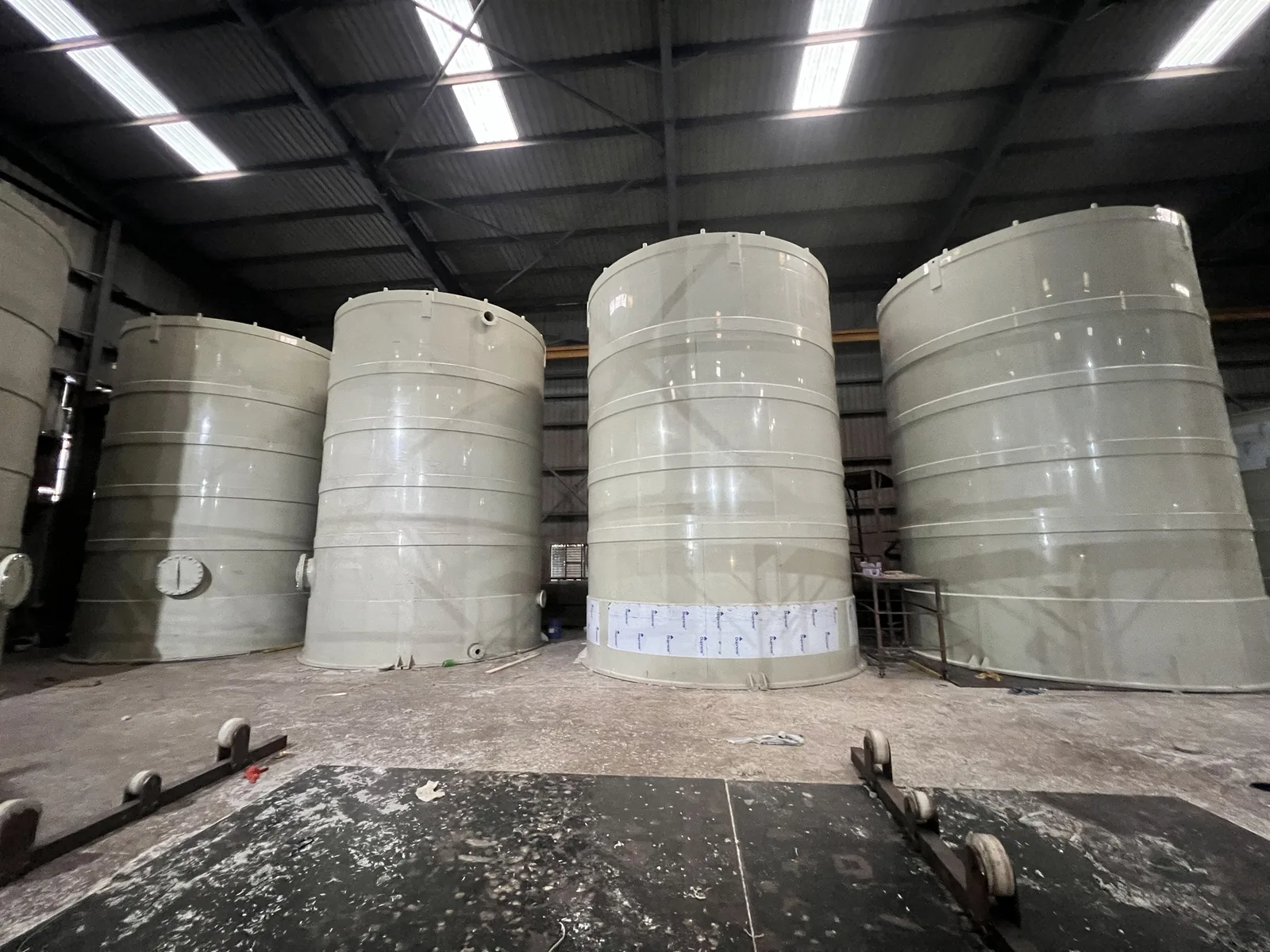
PP, PP-H and FRP tanks made in our own shops
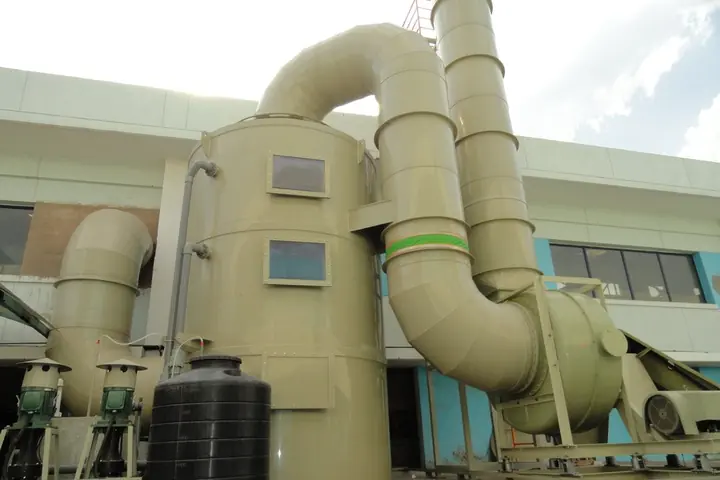
Acid fume extraction: hoods, FRP ducting, scrubber, blower and chimney
Pickling plants and lines, effluent treatment and ZLD
PP, PP-H and FRP process equipment and pollution-control plants
Made in our shops
Tanks, hoods, ducting, scrubbers, FRP blowers and pultruded profiles
For
Pickling, galvanizing, wire and chemical plants
Where
Ghaziabad, India
Product finder
Find your equipment
Answer three questions. We show the SHIVAS Reinplast equipment that fits your process.
SHIVAS ReinplastWire linesTurnkey
Interactive · turnkey
Wire pretreatment lines
Five wire lines, each built around its pretreatment: continuous hot-dip galvanizing, fumeless pickling before drawing, inline electrolytic phosphating, inline borax coating, and electro-galvanizing. Each drawing is a simplified side view of the whole line, from the coil going in (top left) to the coil coming out (bottom left).
1FRP lidClose-fitting covers over every acid and hot tank, in sections that lift for maintenance.
2Water sealThe lid skirt sits in a water trough, so there's no gap for fume to escape.
3Slot extractionSlotted ducts along the wall draw off vapour at the surface and keep the space under the lid at slight suction.
4Wire guidesCeramic or PP guides at small entry and exit slots; the strands pass through and air only flows in.
5To the scrubberFRP duct to a packed-bed scrubber and FRP blower, then the chimney.
6Acid at ambientHCl with inhibitor, held at low temperature with recirculation and filtration, so less fume forms to begin with.
SHIVAS ReinplastPickling linesAnimated
Interactive
Pickling lines, animated
Push-pull, tunnel, continuous and fumeless multi-strand wire pickling.
1 Pick equipment from the tabs
2 Change the mode or sliders under the drawing
3 Tap a number to name that part
⤢ Expand for full screen
SHIVAS ReinplastComplete plantsAnimated
Interactive
Complete plants, running
A pickling shop where acid, water and fume all come back or leave as solids, and a spray-roaster acid regeneration plant from spent liquor to fresh acid and iron oxide.
SHIVAS Reinplast Company of IndiaEnvironmentAir, water and acid
Environment
What leaves the plant, and how we treat it
A pickling, galvanizing or wire line gives off acid fume, waste water and spent acid. Each is handled by a complete system that SHIVAS Reinplast Company of India designs, builds and commissions.
Air
Acid fume
From the pickling tanks and the acid enclosed room
AFE is the complete system: hoods, ducting, scrubber, blower and chimney. Clean air leaves the chimney; the scrubber liquor goes to the effluent plant.
Built by SHIVAS Reinplast Company of IndiaDetails →
Water
Rinse water and effluent
From rinse tanks, scrubber bleed and washing
Effluent treatment plant (ETP)
Equalisation→Neutralisation→Clarifier→Filter press→Sand and carbon filters
Treated water meets the discharge limits; the sludge leaves as filter cake.
Built by SHIVAS Reinplast Company of IndiaDetails →
Water back
Treated water
Where nothing may be discharged
Zero liquid discharge (ZLD)
Reverse osmosis→MEE or MVR evaporator→ATFD→Dry salt
Clean water goes back to the process and nothing leaves the site as liquid.
Built by SHIVAS Reinplast Company of IndiaDetails →
Acid
Spent pickling acid
From the pickling tanks when the iron is high
Acid regeneration
Spent acid storage→Spray roaster→Regenerated acid→Back to pickling
The acid is used again and the iron leaves as iron oxide. Small volumes can instead be neutralised in the ETP.
Built by SHIVAS Reinplast Company of IndiaDetails →
PP, PP-H, FRP and MS equipment fabricated in our own shops, the pickling lines built from it, and the air and water plants around them. Each product has its own page; point at one to see it.
Size the whole effluent plant from acidic effluent to dry salt: the neutraliser and filter cake, RO, a multiple-effect or MVR evaporator and the ATFD, with steam, power and water recovered. Also the scrubber tower and blower motor in kW and HP, acid use and spent acid, the lime to neutralise it, and any fan. Every input is a typical value you can change, and the results follow as you type.
PP, PP-H and FRP equipment fabricated in our own shops, and the environmental plants around them.
SHIVAS Products IndiaFRP profilesRange
SHIVAS Products India · our group's pultrusion company
FRP pultruded profiles
Glass-reinforced profiles for acid shops, cooling towers, walkways and cable routes, made by SHIVAS Products India on its own pultrusion line. Tap a section to watch it come off the line.