Fumeless pickling for wire: keeping the acid inside the tank
Continuous wire lines can pickle without filling the shed with acid fume. How covered, controlled tanks change the economics.
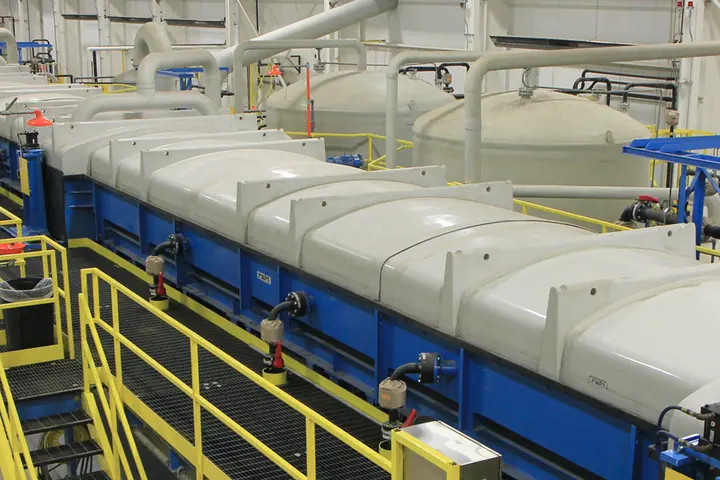
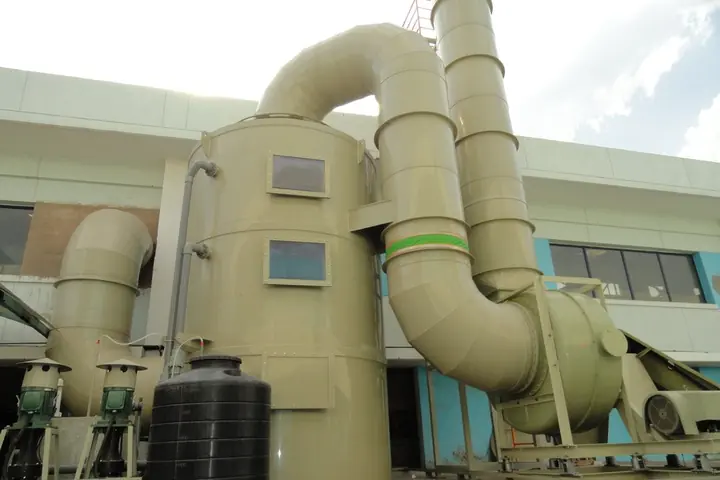
Open hydrochloric acid tanks on a wire galvanizing line release fume that corrodes everything nearby: rolls, take-ups, the building and the electrics. Fumeless pickling keeps the acid inside covered tanks so very little fume escapes, and what does is drawn off to a small scrubber.
How it works
- Tanks are closed with lids, and the strands pass through narrow slots.
- Acid strength, temperature and iron are held in a narrow band, so the acid works efficiently without heating that drives off fume.
- A small extraction keeps the tank space under slight negative pressure.
- Rinsing is cascaded to cut water use and carry-over.
What it saves
- The building and equipment are not exposed to acid fume.
- Extraction and scrubber are much smaller than for open tanks.
- Acid use falls because less is lost and the bath is controlled.
- The line is a better place to work.
Upstream of galvanizing or drawing
Fumeless pickling suits continuous lines: ahead of hot-dip or electro-galvanizing, and in some plants ahead of drawing. Combined with acid recovery, the spent acid becomes a smaller and more manageable stream.