Wire breaks on the drawing line: causes and cures
Every break costs a re-thread, scrap and lost output. Read the broken end, find the cause, and fix it once.
A wire break stops the block, sometimes the whole line. The operator re-threads, the scrap goes in the bin and the output for the shift drops. A few breaks a shift is normal; a rising rate is a message. The broken end usually tells you which one.
Read the broken end
- Cup and cone: one end hollow, the other pointed, with a narrowed neck. The wire was pulled past its strength: too much reduction in that pass, a die smaller than planned, or too much back tension.
- Flat and square: little or no neck. Something hard or brittle: an inclusion or seam in the rod, a hard weld, or wire that has overheated and aged.
- Arrow-shaped cracks inside the wire: central bursts. They come from too little reduction through too steep a die angle, so the centre of the wire is torn while the surface is drawn.
- A break at a weld: the weld was not annealed or the flash was not trimmed.
Causes in the rod
Inclusions, seams, laps and segregation are built into the rod at the steel works, and no drawing practice removes them. If breaks cluster on certain coils or one supplier, keep the heat numbers and send samples back. Scale left on after descaling is the rod-preparation cause that is in your hands.
Causes in the line
- Uneven reductions. One pass doing much more than its neighbours. Plan the die sequence so each pass does a fair share; the wire calculator shows the reduction per die.
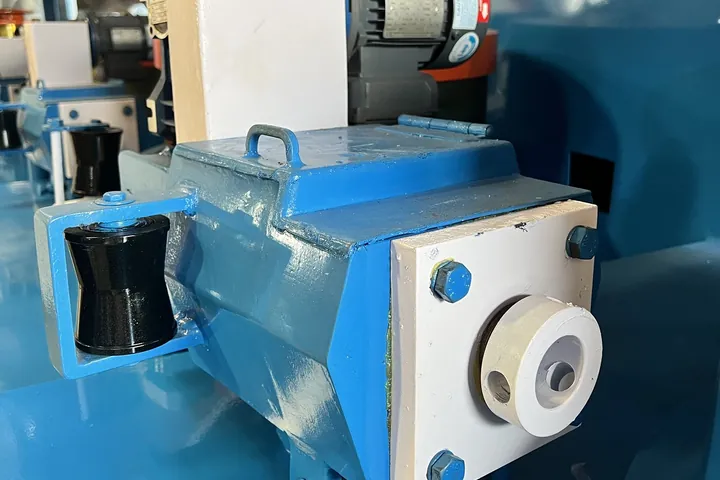
- Worn, oval or misaligned dies. Check every die on a schedule, recut before the wear ring deepens, and set the die holder in line with the block.
- Lubrication failure. Damp or charred soap, empty boxes, or a tired wet-drawing emulsion. See wire drawing lubricants.
- Heat. High carbon wire that runs hot between blocks strain-ages and turns brittle. Keep block and die cooling clean and flowing.
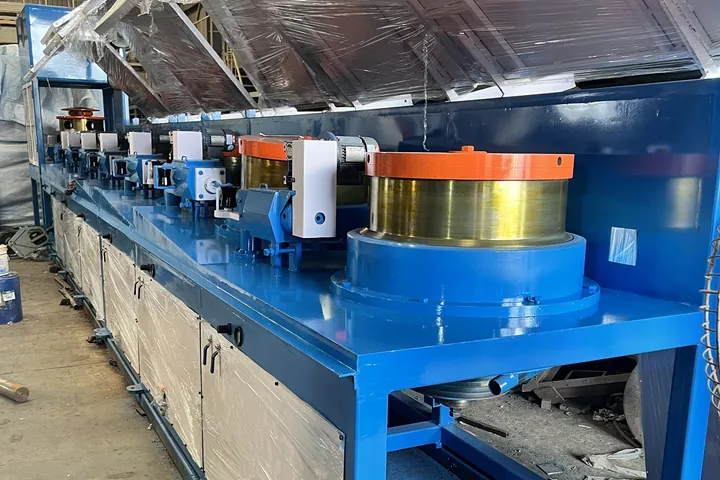
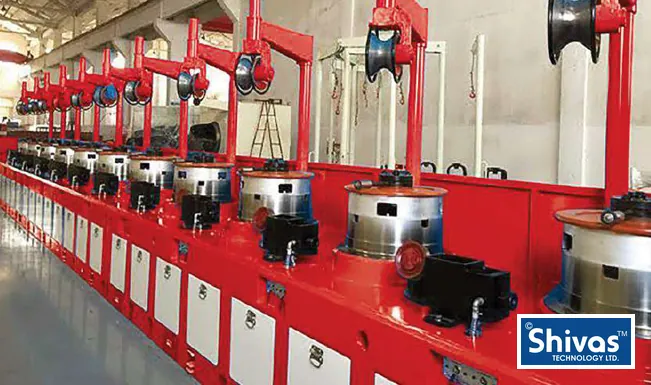
- Tension and slip. On a straight line machine every block must turn at exactly the speed the wire needs. A block that runs too fast pulls the wire thin; one that runs too slow lets wire pile up. Tune the tension control after any die change.
Keep a break log
Write down every break: the die or block, the time, the rod coil and heat number, and what the end looked like. After two weeks the pattern is usually plain: one block, one supplier, one shift or one die size. Fix that, and the break rate falls for good.