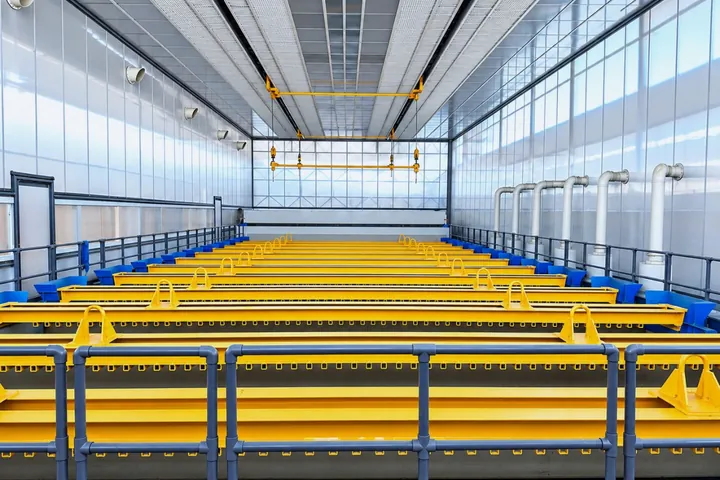
Acid fume from pickling: hoods, the packed scrubber and the blower
Hydrochloric acid fume corrodes everything it touches, starting with the building. How a SHIVAS Reinplast system captures it at the tank and washes it out of the air.
A pickling tank gives off hydrochloric acid fume all the time, and more when the acid is warm, strong or agitated by a load going in. The fume is invisible at low levels but it rusts crane rails, roof sheets and electrical panels within months. The answer has three parts: catch the fume at the tank, wash it out of the air, and move the air with a fan that the acid cannot attack.
1. Capture at the tank
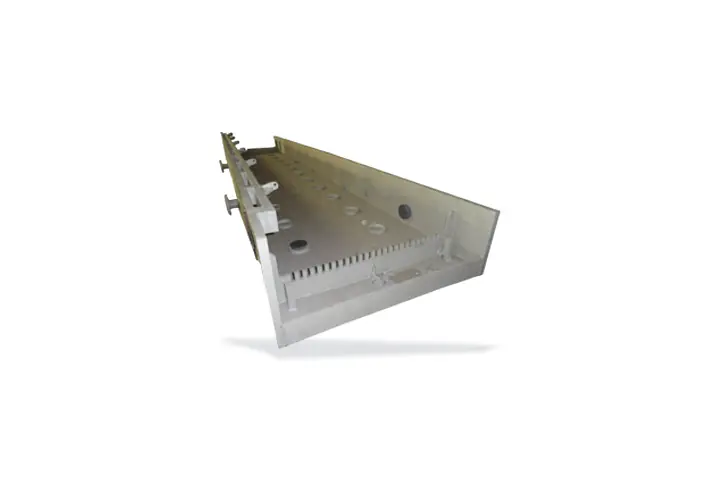
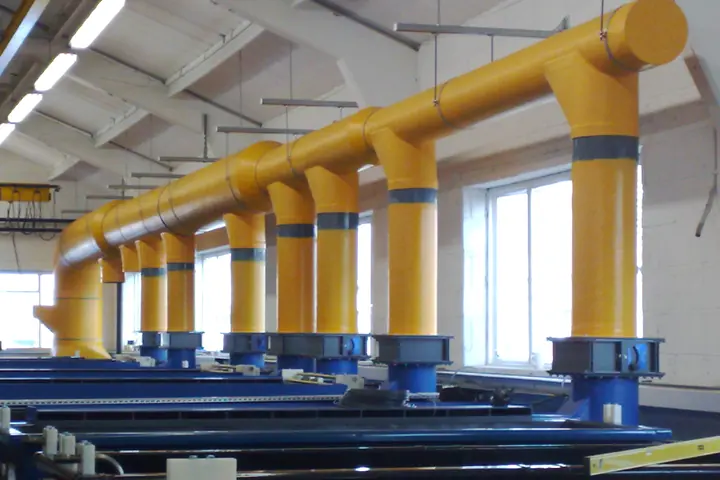
There are two ways to catch the fume. An acid enclosed room puts the whole pickling line inside a closed building with its own extraction, which suits batch galvanizing where the crane has to reach every tank. Lip extraction puts a slot along the edge of each tank, or a push-pull pair where one side blows a thin air curtain across the surface and the other side collects it. The air needed is set by the tank surface area: roughly 0.25 m³/s per m² of surface for push-pull, and around 0.4 m³/s per m² for a lateral slot.
2. Wash it out: the packed-bed scrubber
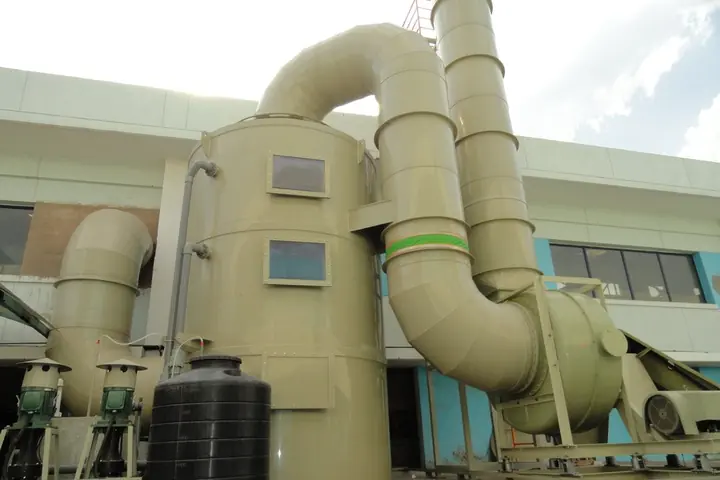
Hydrochloric acid is very soluble in water, which makes it straightforward to scrub. The air rises through a tower filled with plastic packing while water, or a weak alkali for the final polish, trickles down over the packing. The large wetted surface of the packing does the work.
| Design point | Typical value for HCl fume |
|---|---|
| Air velocity in the tower | About 2 m/s |
| Liquid to gas ratio | About 2 to 3 litres of liquid per m³ of air |
| Packing height | From the transfer units needed for the removal you want |
| Liquid | Water, with a sodium hydroxide polish for low emission |
| Above the packing | Mist eliminator, so droplets do not leave the stack |
The tower diameter follows from the air flow and the velocity. The packing height follows from how much of the acid you must remove: the higher the removal, the more transfer units and the taller the bed. The recirculated liquid slowly takes up acid, so a small bleed goes to the effluent plant and fresh water makes up the level.
3. Move the air: the FRP blower
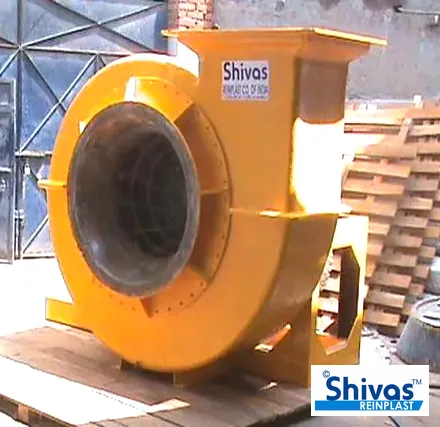
The fan is placed after the scrubber so it handles washed air, and it is made of FRP so the traces of acid that remain do no harm. Its motor follows from the air flow and the total pressure drop: packing, mist eliminator, hoods, ducting and stack. Ducts and stack are FRP or PP for the same reason.
What goes wrong
- Too little air at the tank: fume escapes before it reaches the hood. Measure the capture, not just the fan.
- Dry packing: a blocked spray or a stopped pump lets acid straight through. Interlock the pump with the fan.
- Scaling: calcium and iron salts build up in the packing if the bleed is too small.
- Steel parts in the system: they are the first to fail. Everything wetted should be PP, PP-H or FRP.