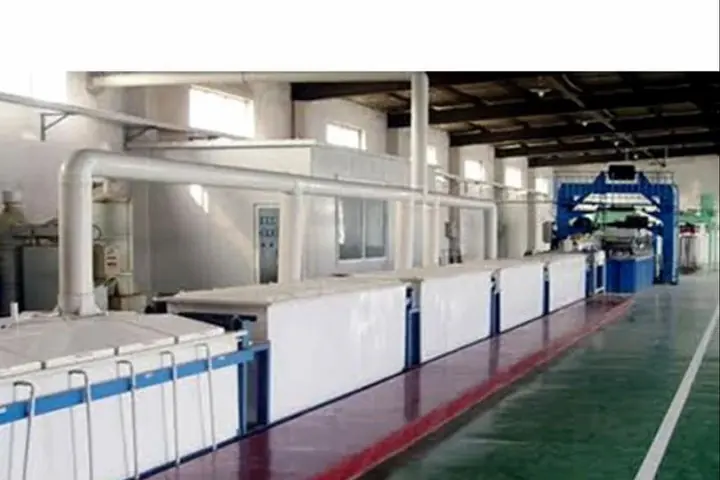
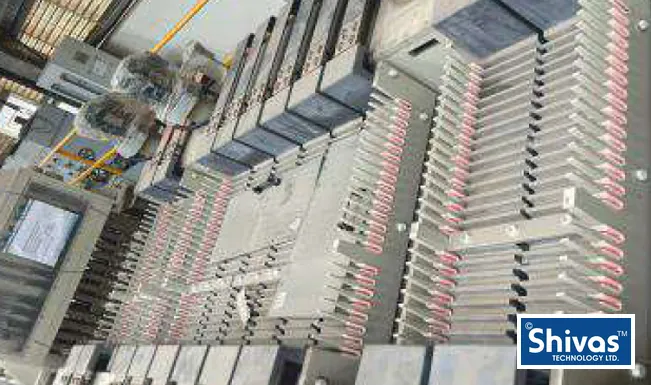
Nuts run on without re-tapping.
SHIVAS Technology · Galvanizing
Spin galvanizing plant
For fastenersAutomatic spin galvanizing for bolts, nuts and washers: dipped in baskets, spun over the bath, clean threads every time.
- M10–M36 bolts, nuts, washers
- Small kettle, less zinc tied up
- Spun in a hood over the bath
- Quench, passivation and weighing
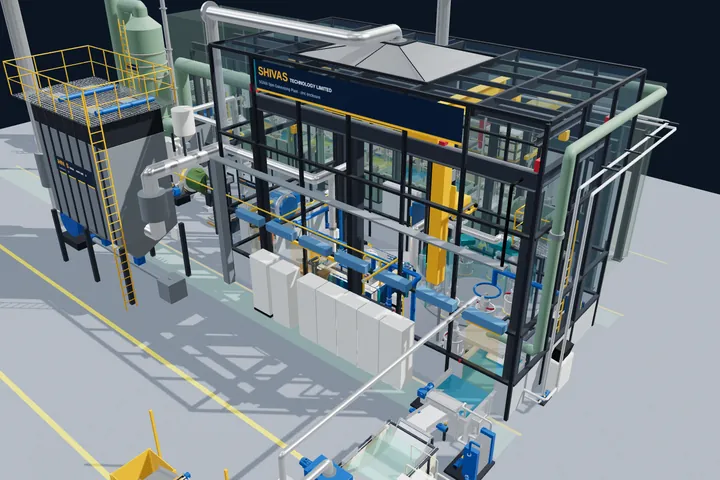 3D model · not a photo
M10 to M36bolts, nuts, washers
Small kettleless zinc tied up
Spun over the bathexcess zinc returns to the kettle
Overview
Threaded parts cannot be hung and drained like structural steel; excess zinc would fill the threads. In spin galvanizing the parts are loaded into perforated baskets, dipped, lifted and spun at speed inside a fixed spin hood just above the bath, so excess zinc is thrown off and runs back into the kettle.
SHIVAS designs spin plants around your fastener mix and tonnage: pretreatment for small parts, basket handling, the kettle and furnace, the spinner, quench, passivation and weighing.
Why it pays
Spinning recovers excess zinc to the bath.
Small kettle and furnace.
Automatic cycles.
Technical specification
Typical ranges. Every unit is sized to your duty; the offer carries the exact figures.
| Parts | Fasteners M10 to M36, washers, small castings |
|---|---|
| Kettle | Small steel kettle, sized to the heat its walls can pass (1.35 m in our SG500 design) |
| Spinner | Dip-spin head: the basket spins inside a fixed hood over the bath |
| Coating | ISO 1461 centrifuged / ISO 10684 class |
| After | Quench, passivation, drying, weighing |
Calculator
Work it out for your own plant. Every input is a typical value you can change and the results follow as you type; send the result to us and we reply with a proposal.
The process, step by step
- 1Weigh and fill
Parts are weighed into perforated baskets: one part number per basket, each with its own recipe.
- 2Pretreatment
Degreasing, pickling, rinsing and fluxing in rotating drums in PP-H tanks inside an enclosed acid room.
- 3Dry
A flue-gas-heated dryer brings the parts up to temperature; a dry check stops any wet basket going into the zinc.
- 4Dip
The dip-spin head lowers the basket into the zinc and agitates it so gas escapes from nuts and recesses.
- 5Clear the surface
Two red vanes on the basket and a red skimming flap push the ash over the weir, so the basket comes up through a clean surface.
- 6Spin
The basket rises into the fixed spin hood and spins; flung zinc runs back into the kettle while still liquid.
- 7Discharge
The basket opens at one station and the parts drop into the quench.
- 8Quench and passivate
The parts drop through a perforated plate into the water quench, then a separate Cr(III) passivation limits white rust.
- 9Dry, inspect, weigh
Air knife and belt dryer, an inspection belt, and output weighing for every lot.
Options, build and uses
Options
- Basket preheat
- Automatic basket handling
- Second spinner for higher output
How we build it
- Kettle, furnace, frames and tanks by SHIVAS
Who it is for
- Fastener makers for towers, structures and rail
- Job galvanizers adding small parts
What this plant is built from
In process order. Each one has its own page.
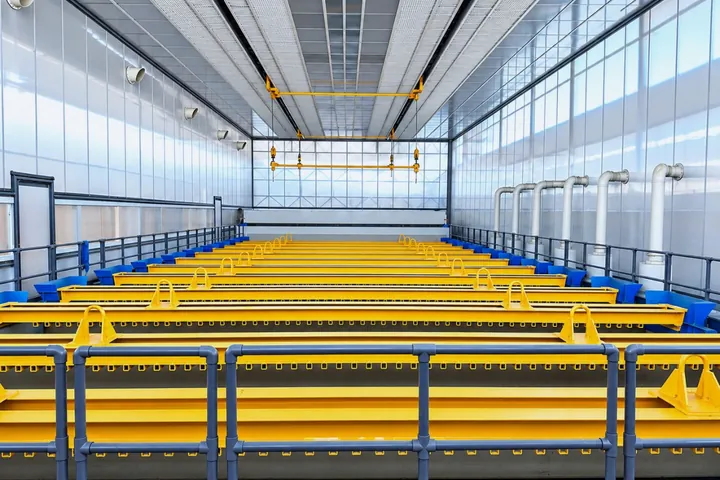
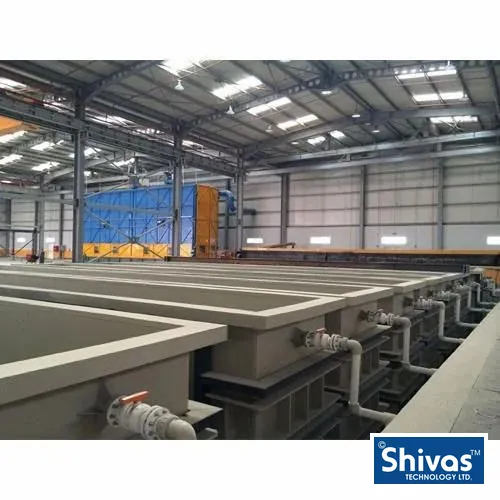 01 Pretreatment tanksGalvanizing · 2 photos
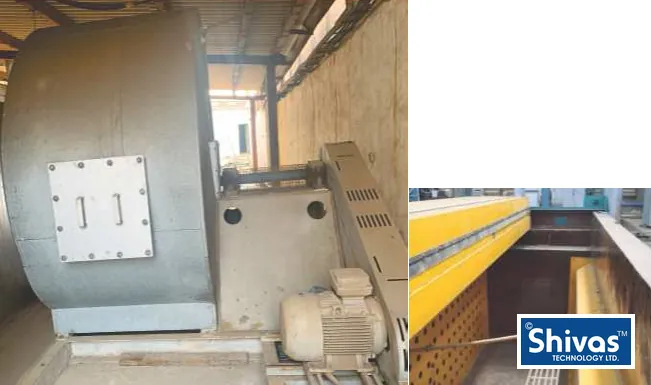
 02 Acid enclosed roomGalvanizing · 1 photo
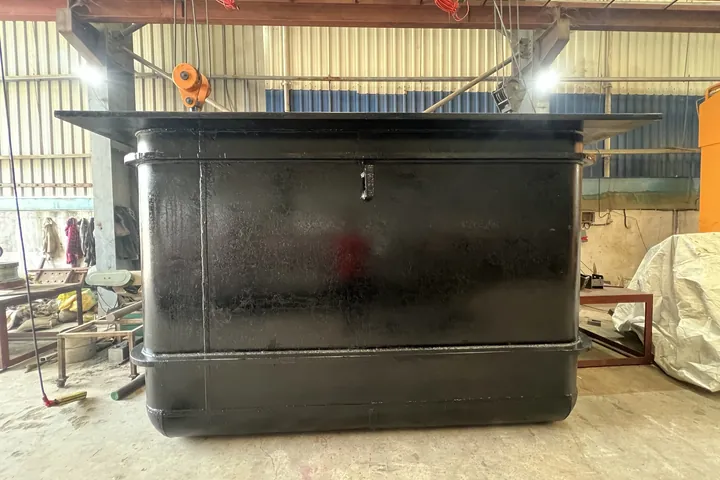
 03 DryerGalvanizing · 1 photo
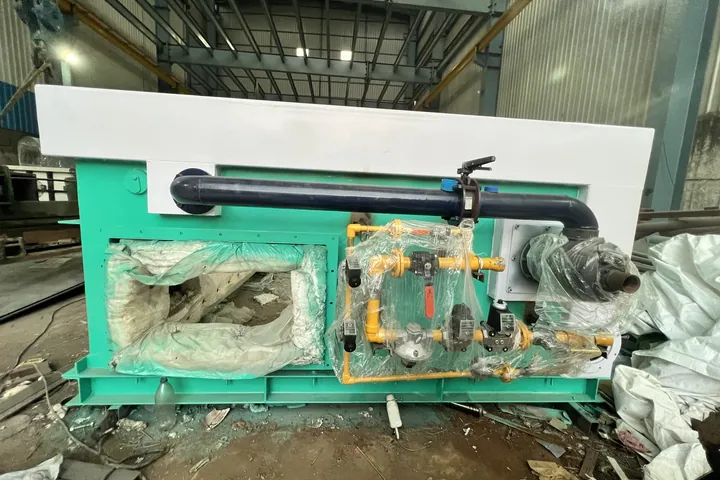
 04 Zinc kettleGalvanizing · 17 photos
 05 Galvanizing furnaceGalvanizing · 5 photos
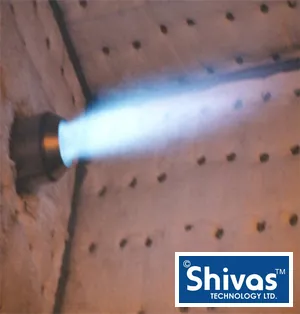 06 High-velocity burnerGalvanizing · 1 photo07 Dual fuel & gas trainGalvanizing · 2 photos08 Zinc fume extractionGalvanizing
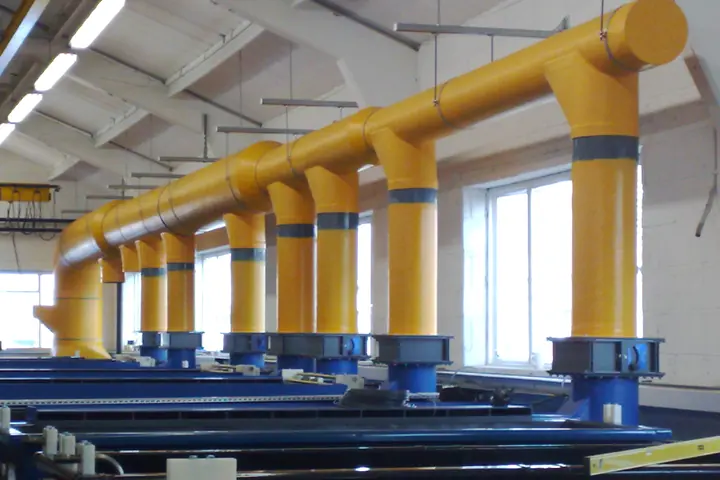 09 Acid fume extractionGalvanizing · 1 photo10 Zinc ash recoveryGalvanizing11 Quench & passivationGalvanizing12 Automation & controlGalvanizing
3D model
Open the interactive 3D →Computer model from a real SHIVAS project. It shows the arrangement; it is not a photo.
From our engineers
Questions buyers ask
Can a structural plant do fasteners?
Only with a centrifuge; dipping alone fills threads. A spin line beside the main kettle is common.
Enquiry · Spin galvanizing plant
Get a quote
Tell us the capacity, sizes and site. We reply with a scheme, a layout and an offer.
What we need for your quote
- Fastener sizes and mix
- Tonnes per month
- Fuel