Effluent from pickling and galvanizing: from neutralisation to zero liquid discharge
Spent acid, rinse water and scrubber bleed carry iron, zinc and chloride. How to cut the volume first, treat what is left, and when zero liquid discharge makes sense.
Every pickling and galvanizing plant produces acidic water. It comes from the rinse tanks after pickling, the bleed of the fume scrubber, the occasional dump of a degreasing or flux bath, and above all from spent pickling acid. It carries free hydrochloric acid, dissolved iron, some zinc and a lot of chloride. It cannot go to drain as it is, and the cost of treating it rises with every cubic metre, so the work starts inside the plant.
Make less of it
- Use cascade or counter-flow rinsing, so water is used twice before it leaves the line.
- Let work drain over the tank before it moves on. Drag-out is acid and water that you pay to treat.
- Keep pickling acid working longer with good temperature control and an inhibitor, and dump it on iron content, not on habit.
- Keep the flux bath clean with flux regeneration instead of dumping it.
Spent acid
Spent pickling acid is the most concentrated stream: little free acid and a high iron chloride content. Neutralising it uses a lot of lime and makes a lot of sludge. Where the volume justifies it, acid regeneration or product recovery turns it back into something useful instead of a waste.
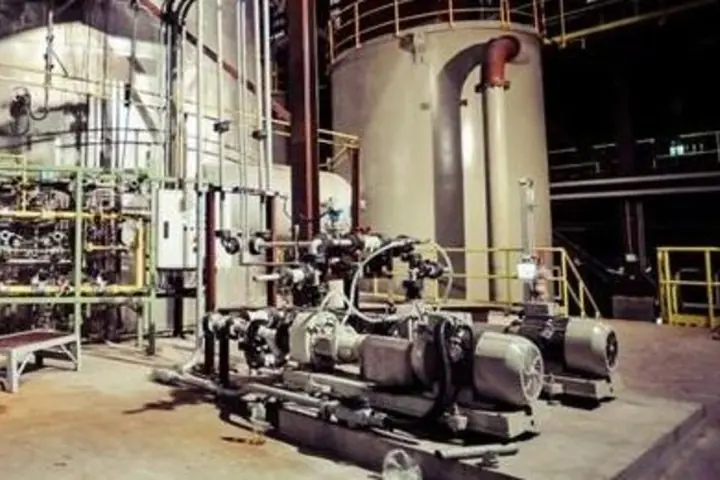
The physico-chemical ETP
- Equalisation: a tank that evens out flow and strength, so the plant downstream sees a steady feed.
- Neutralisation: lime or sodium hydroxide raises the pH to about 8.5 to 9.5, where iron and zinc come out as hydroxides.
- Oxidation: air turns dissolved ferrous iron into ferric, which settles far better.
- Flocculation and clarification: the solids gather into flocs and settle in a clarifier.
- Filtration: sand and carbon filters polish the clear water.
- Sludge dewatering: a filter press turns the settled sludge into cake for disposal.
The treated water meets the limits for metals and pH, but it is still salty: neutralising hydrochloric acid leaves calcium or sodium chloride dissolved in it.
Zero liquid discharge
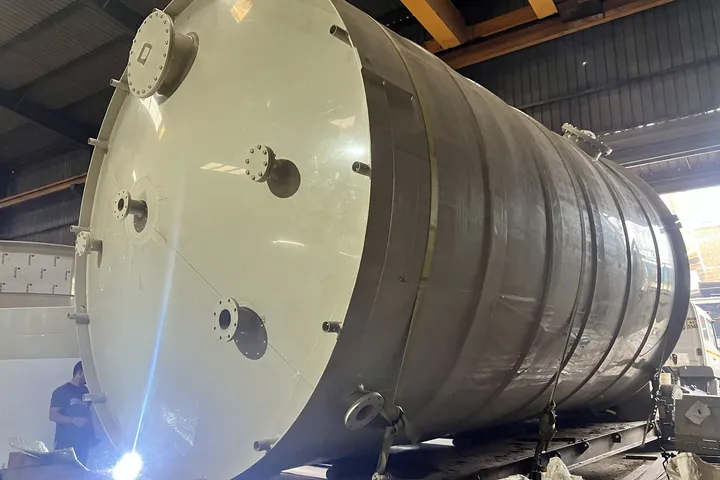
Where no discharge is allowed, or water is scarce, the treated water goes on to zero liquid discharge (ZLD). Reverse osmosis recovers most of it as clean water. The concentrate is evaporated in a multiple-effect or mechanical vapour recompression evaporator, and an agitated thin film dryer turns what is left into dry salt. Chloride brines are corrosive, so materials are chosen with care at every hot stage.
| Stage | What comes out |
|---|---|
| ETP | Treated water within discharge limits, and hydroxide sludge |
| RO | Clean water for reuse, and a smaller volume of concentrate |
| Evaporator (MEE or MVR) | Condensate for reuse, and a thick slurry |
| ATFD | Dry salt |