Galvanized wire: from drawn wire to zinc-coated coil
A continuous galvanizing line cleans, coats and winds many wires at once. What each section does, and what sets the coating you sell.
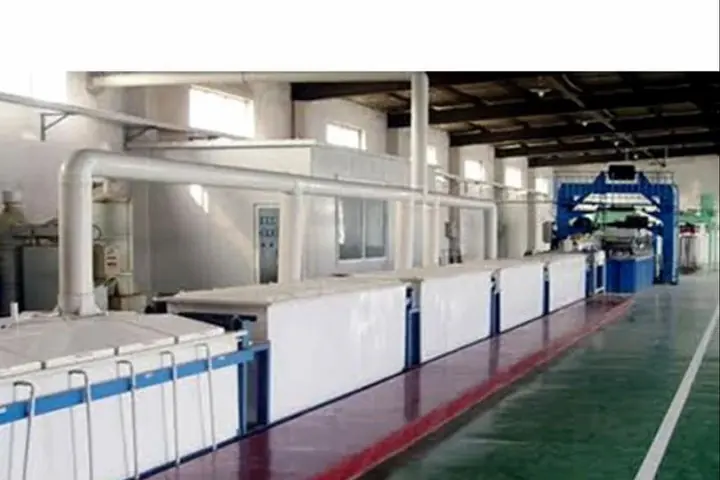
Galvanized wire goes into fencing, barbed wire, mesh, strand and cable armour, and its zinc coat is what the customer pays for. On a continuous line, many wires run side by side through every section, from payoff to take-up, without stopping.
The sections of the line
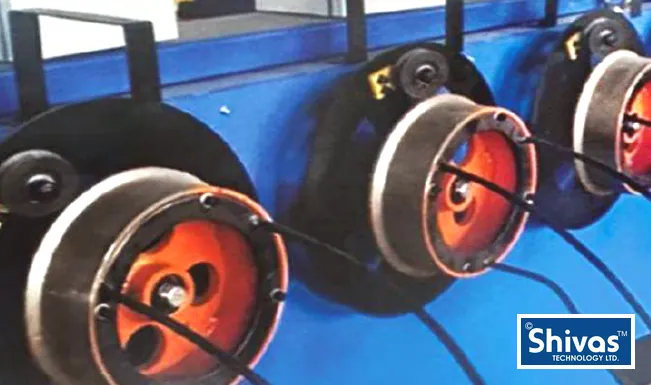
- Payoffs: one coil per wire, with room to change coils while the line runs.
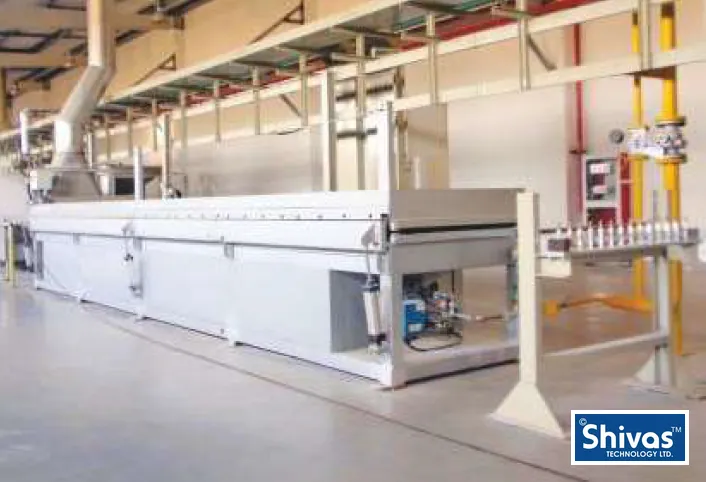
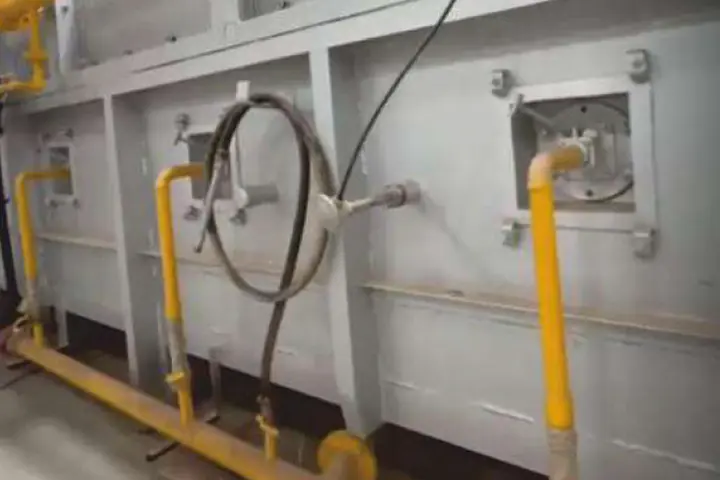
- Annealing: for soft wire, a furnace heats the drawn wire to undo the work hardening. Hard galvanized wire skips it.
- Cleaning: degreasing, acid pickling and rinsing take off soap, oxide and dirt. A fumeless pickling section keeps the acid fume inside the line.
- Fluxing and drying: a flux film protects the clean wire and helps the zinc wet it. The wire must enter the zinc dry.
- The zinc bath: the wires run through molten zinc at about 450 °C, guided under the surface and out at the exit.
- Wiping: at the exit, the wiping system takes off surplus zinc and sets the coating mass.
- Cooling and take-up: a water quench sets the coat, then take-ups wind each wire into a coil.
What sets the coating
Coating mass is set mostly by line speed and wiping. A faster line pulls out more zinc; harder wiping takes more off. Thicker wire carries more heat into the bath and needs more time in it, so for one bath the line runs slower for heavy gauges than for light ones. Coating classes for zinc-coated steel wire are set in standards such as IS 4826 and ASTM A641; agree the class with your customer and set the line to it.
Keeping the coat even
- Hold the bath temperature steady. A bath that swings makes a coat that swings.
- Keep every wire at the same tension, so each one leaves the bath along the same path.
- Clean the wire properly. Bare spots and rough coating on wire almost always start in cleaning or fluxing, not in the zinc.
- Skim the bath and remove dross on a routine; zinc ash and dross on the wire make lumps.
Planning a line
Start from the wire sizes, the coating classes and the tonnage per day. Those set the number of wires, the line speed range, the bath length and the furnace power, and from there the cleaning and fume sections. SHIVAS builds the complete line, and its sections one at a time when you are upgrading.