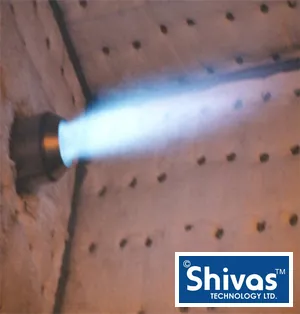
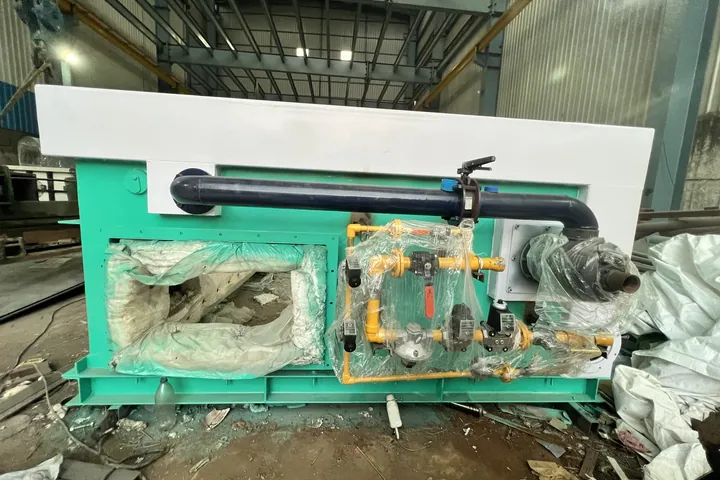
No extra fuel for flux heating.
SHIVAS Technology · Galvanizing
Flux heating system
Flux kept warm with heat recovered from the quench tank, so work leaves the flux warm and dries fast, and the quench water stays cool.
- 50–60 °C set point
- Heat from the quench tank
- PID + 3-way valve
- PP-H tank
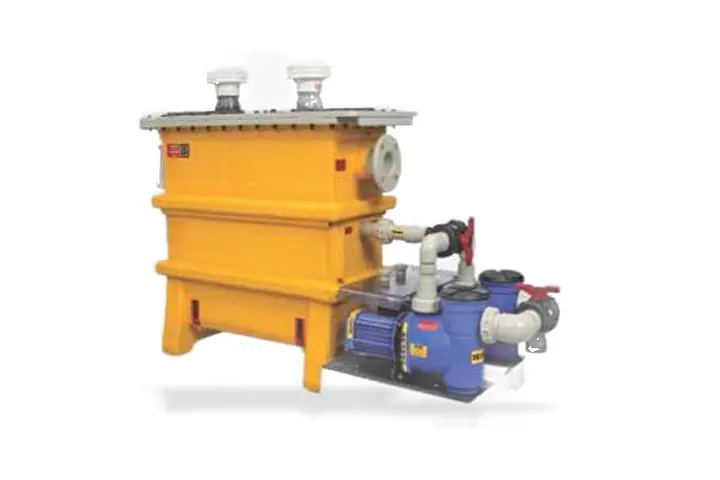 1 photo
50–60 °Ctypical flux set point
Free heattaken from the hot quench water
PID controlthree-way valve holds temperature
Overview
Warm flux wets the steel better and the work dries faster, which means less moisture reaches the zinc. Work comes out of the kettle at about 450 °C and dumps most of that heat into the quench tank, which then has to be cooled. SHIVAS uses that heat for the flux instead of burning fuel for it.
Hot quench water is pumped through a plate heat exchanger or an in-tank PP / PVDF coil in the flux tank and back to the quench. A three-way valve under PID control keeps the flux at its set point, and the quench water is cooled at the same time.
Why it pays
The flux is warmed and the quench water is cooled.
Warm work dries quicker in the dryer.
Temperature held for consistent results.
Technical specification
Typical ranges. Every unit is sized to your duty; the offer carries the exact figures.
| Heat source | Hot water from the quench tank |
|---|---|
| Exchanger | Plate exchanger or in-tank PP / PVDF coil |
| Control | PID with three-way valve |
| Set point | Typically 50 to 60 °C |
Options, build and uses
Options
- Top-up heater for start-up after long stops
- Degreasing tank heating from the same loop
- Energy metering
How we build it
- Coils, piping, pumps and tank work by SHIVAS
Who it is for
- Batch galvanizing plants with a water quench
3D model
Computer model from a real SHIVAS project. It shows the arrangement; it is not a photo.
Questions buyers ask
Is there enough heat in the quench?
Galvanized work enters the quench at about 450 °C, so every tonne dipped brings heat in. On normal production that is more than the flux tank loses; a small top-up heater covers start-up after long stops.
Does it change the quench?
It helps: the quench water runs cooler, which is what you want for quenching and passivation.
From our engineers
Practical notes from the engineers who design and build these plants.
Enquiry · Flux heating system
Get a quote
Tell us the capacity, sizes and site. We reply with a scheme, a layout and an offer.
What we need for your quote
- Flux tank volume
- Quench tank size and tonnage dipped
- Layout of the flux and quench tanks